Miro Insights
An AI powered hub that turns scattered customer feedback into clear, revenue-backed product priorities.
Description
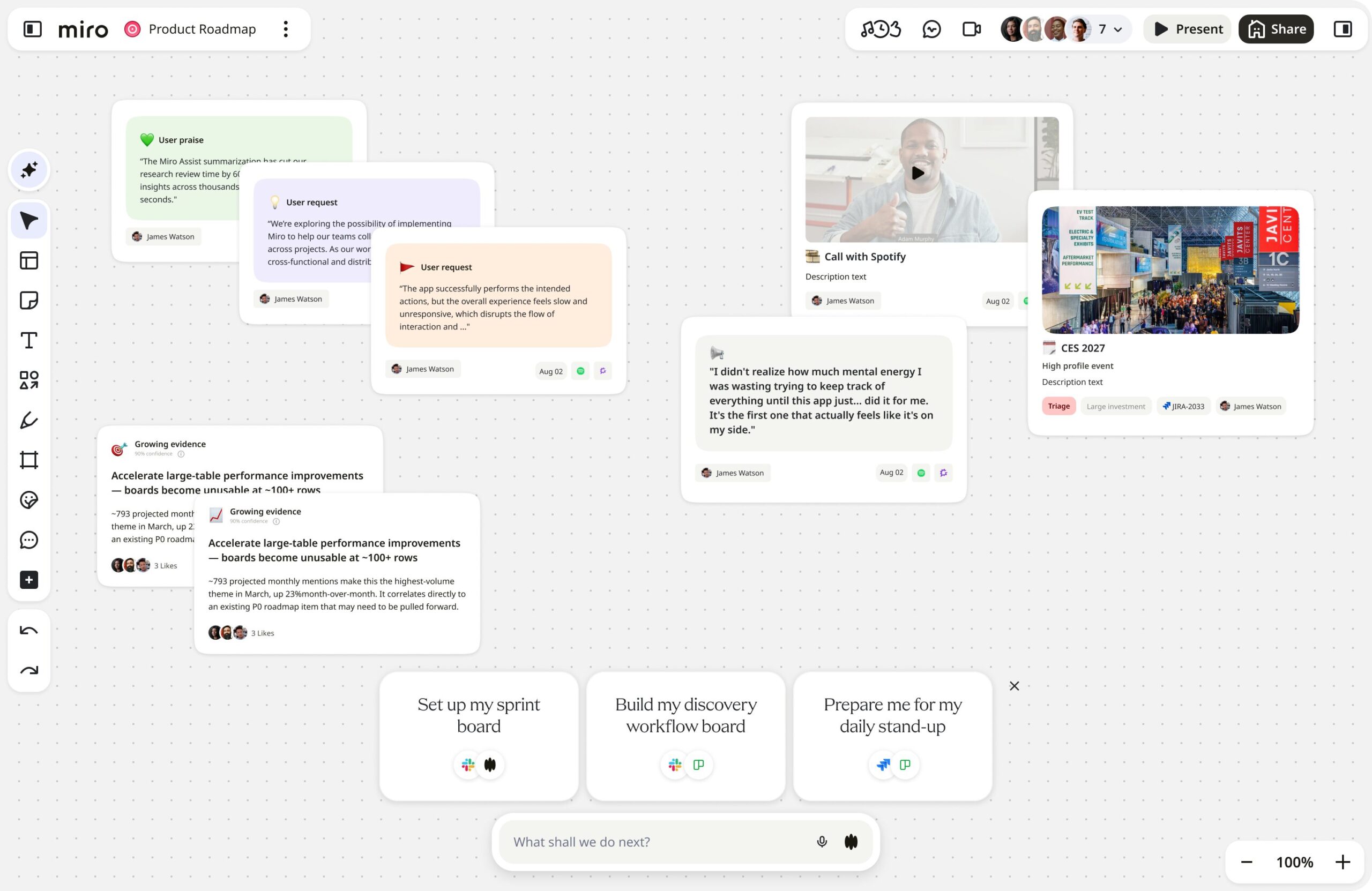
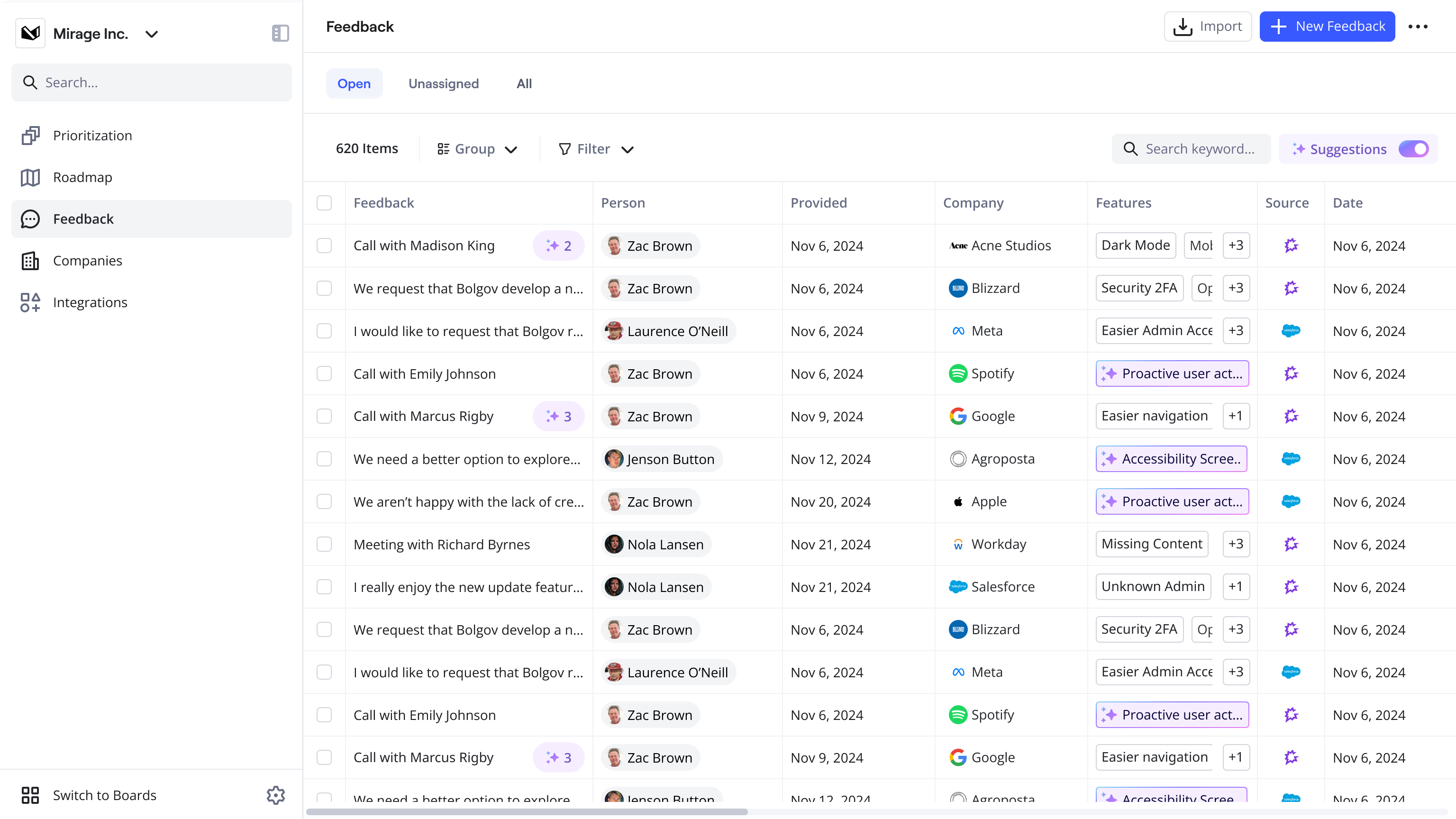
Product teams are drowning in feedback scattered across dozens of tools, leaving PMs guessing at priorities. Miro Insights is built for teams that drive product direction — primarily PMs and product owners, but also customer success, design, and sales teams who need visibility into what customers want. It solves the chaos by using AI to aggregate feedback across the tech stack, surface patterns, quantify customer impact, and align work with business value — so teams can stop guessing and start building with confidence.
Problem themes
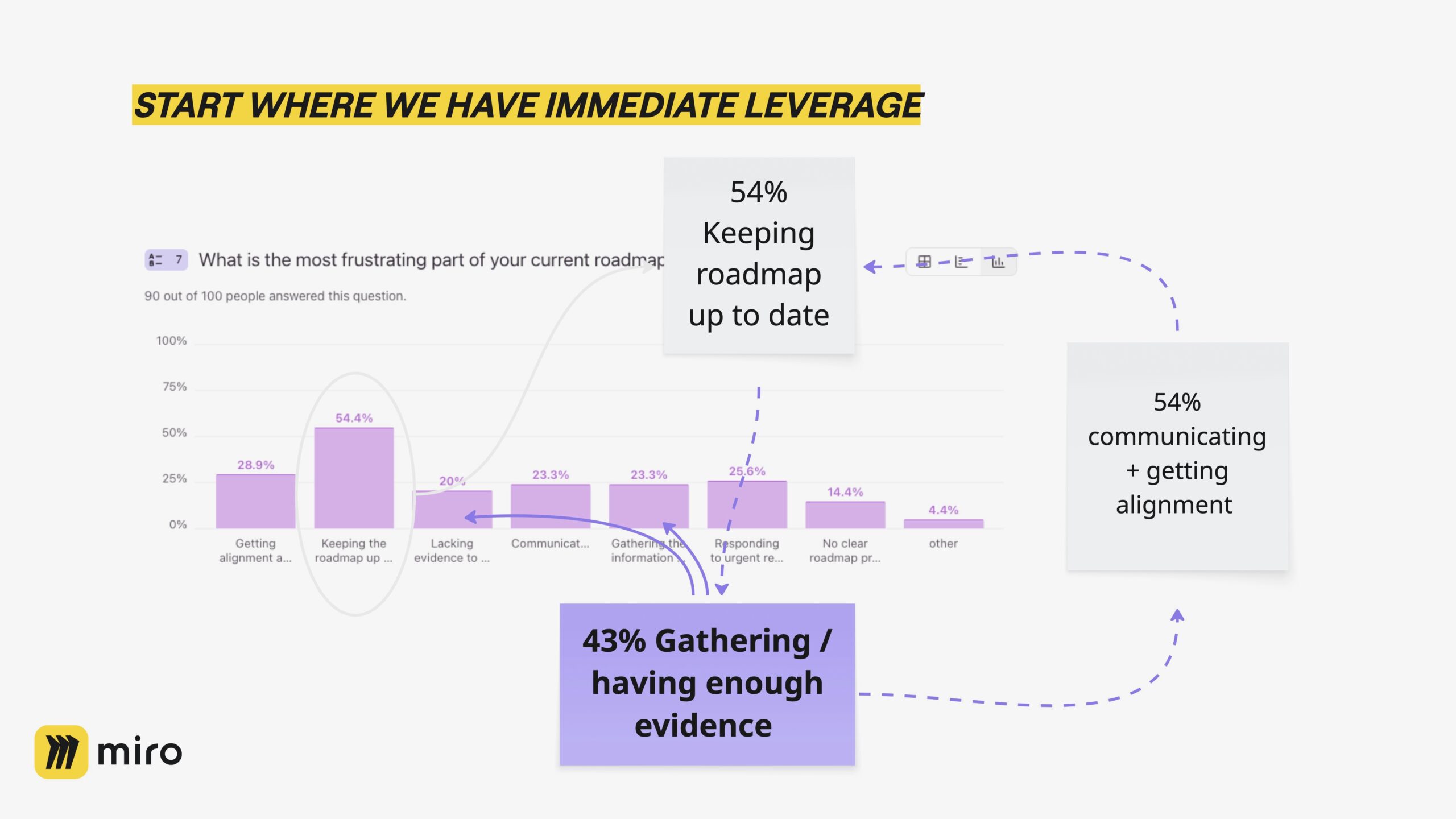
Through user research and quantitative data, we found product leaders and EPD teams shared similar friction with the original experience — scattered feedback, heavy synthesis work, and roadmaps that drifted from customer reality.
Lack of integration
Managing feedback and synthesizing insights require significant manual effort — time-consuming and error-prone.
Usability challenges
Complex interfaces and cognitive overload made it hard to extract meaningful insights quickly.
Feature management
Tracking feedback and aligning prioritization with strategic roadmap expectations was a struggle.
Personalization needs
Users wanted customizable dashboards, filtering, and search tailored to role and tasks.
Goal
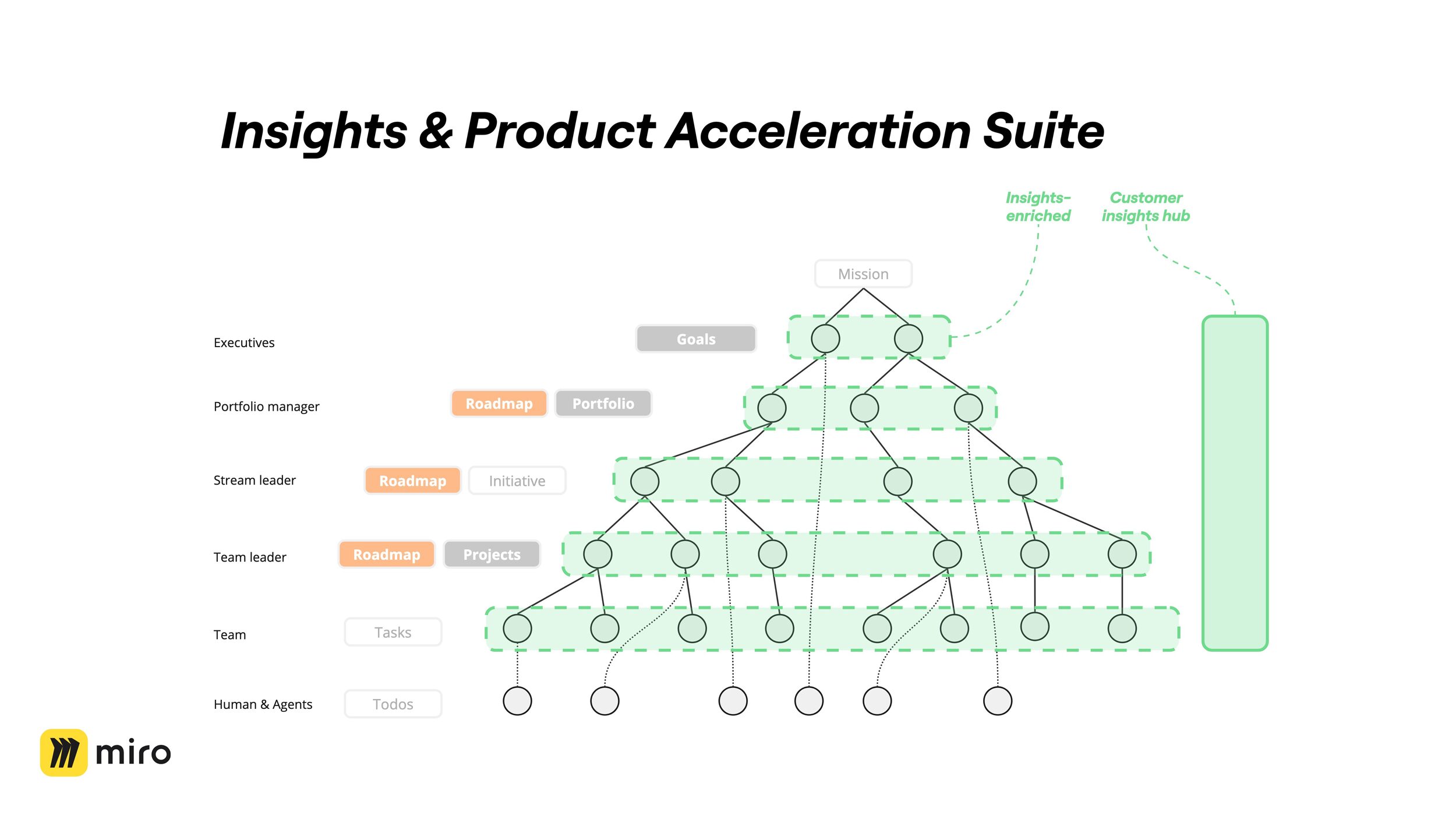
Roadmapping was fragmented, manual, and reactive. Our goal was to build a dynamic, AI-first roadmapping system where proactive intelligence continuously surfaced actionable decisions, keeping roadmaps aligned with reality and company strategy.
Product planning
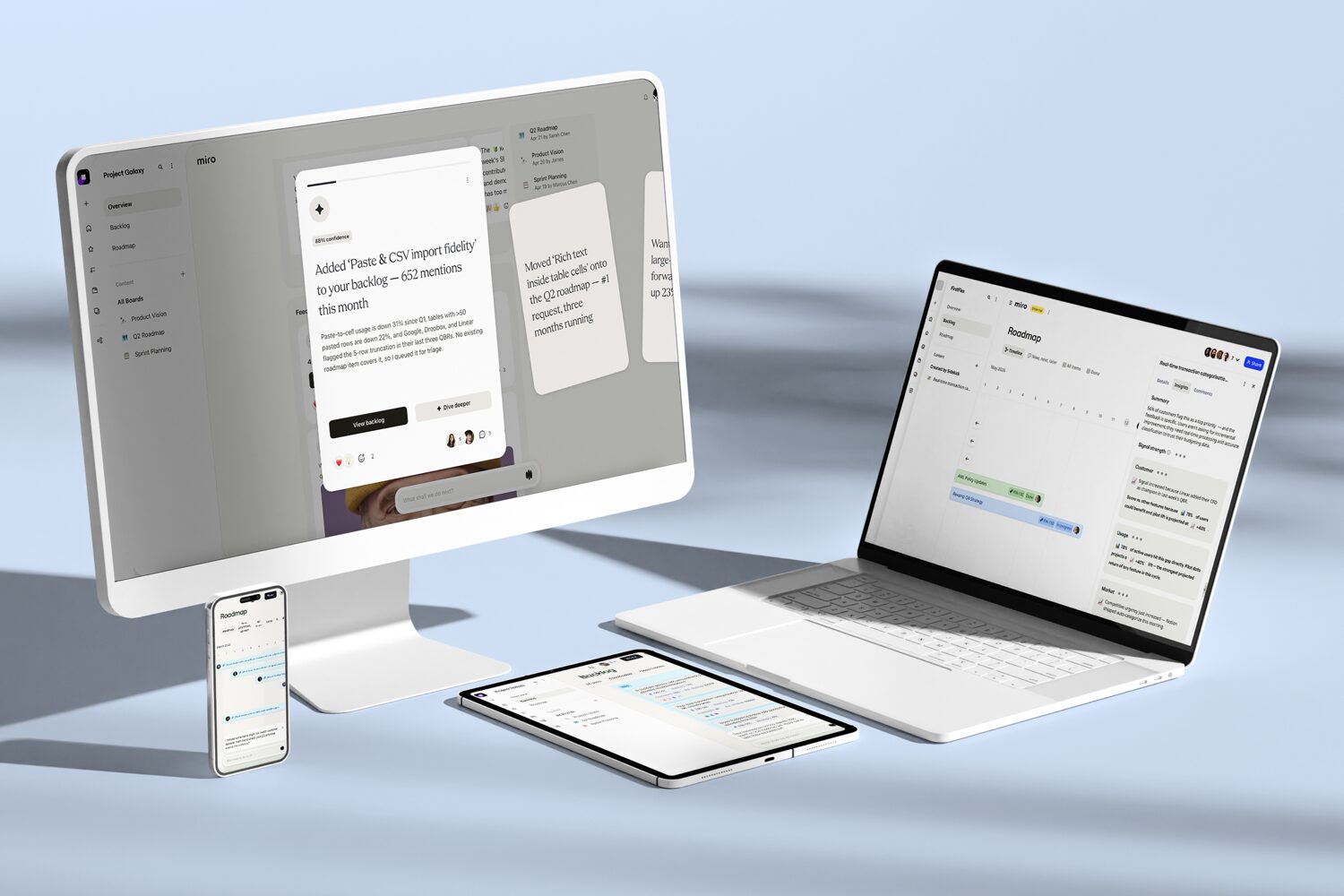
Roadmapping was the second-highest traffic use case on Miro's website; ~60% of customers already used Miro for roadmapping. We proposed an opinionated experience with backlog and roadmap views, Insights enrichment, and Jira/CSV integrations.
User personas

The decision-maker
Product leaders prioritizing with clear customer evidence.
- Checks what's changed since last review
- Skims top signals and trends
- Dives into evidence when it impacts work
- Adjusts priorities, designs, or research focus

The builder
PMs, designers, and engineers creating a shared source of truth.
- Reviews signal strength, confidence, and impact
- Connects signals to goals and initiatives
- Prepares decisions for leadership review

The practitioner
Designers and researchers grounding day-to-day work in evidence.
- Scans what's changed since the last check
- Digs into evidence when work is impacted
- Adjusts design, research, or technical focus
- Shares key signals to align the team
Low-fidelity exploration
Low-fidelity exploration focused on four interconnected ideas — proactive signals that cut through noise, collaborative agent-and-human intelligence, effortless feedback-to-roadmap linkage, and a workspace for human intervention — testing how AI and people could work together to turn evidence into roadmap decisions.
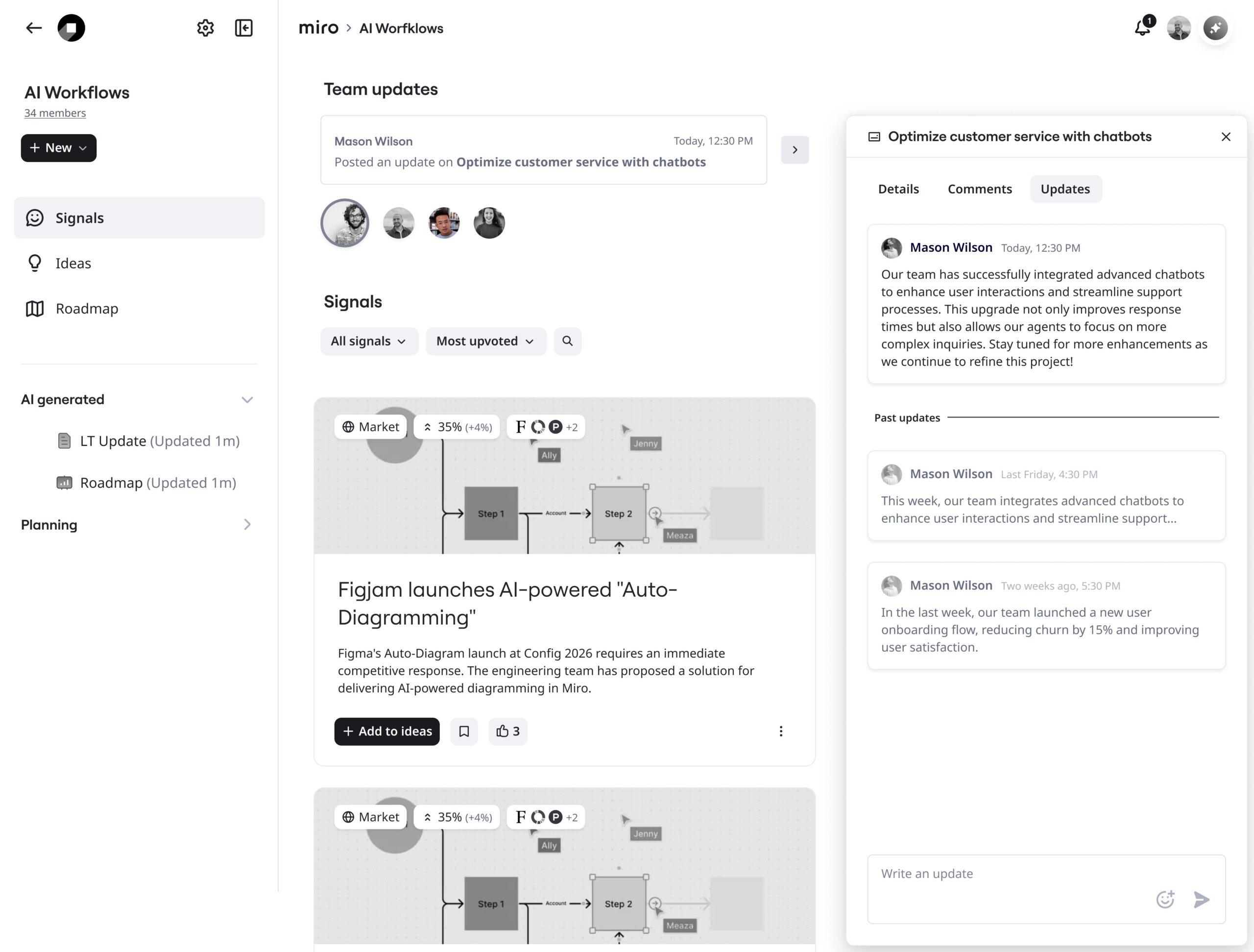
Proactive signals for roadmapping
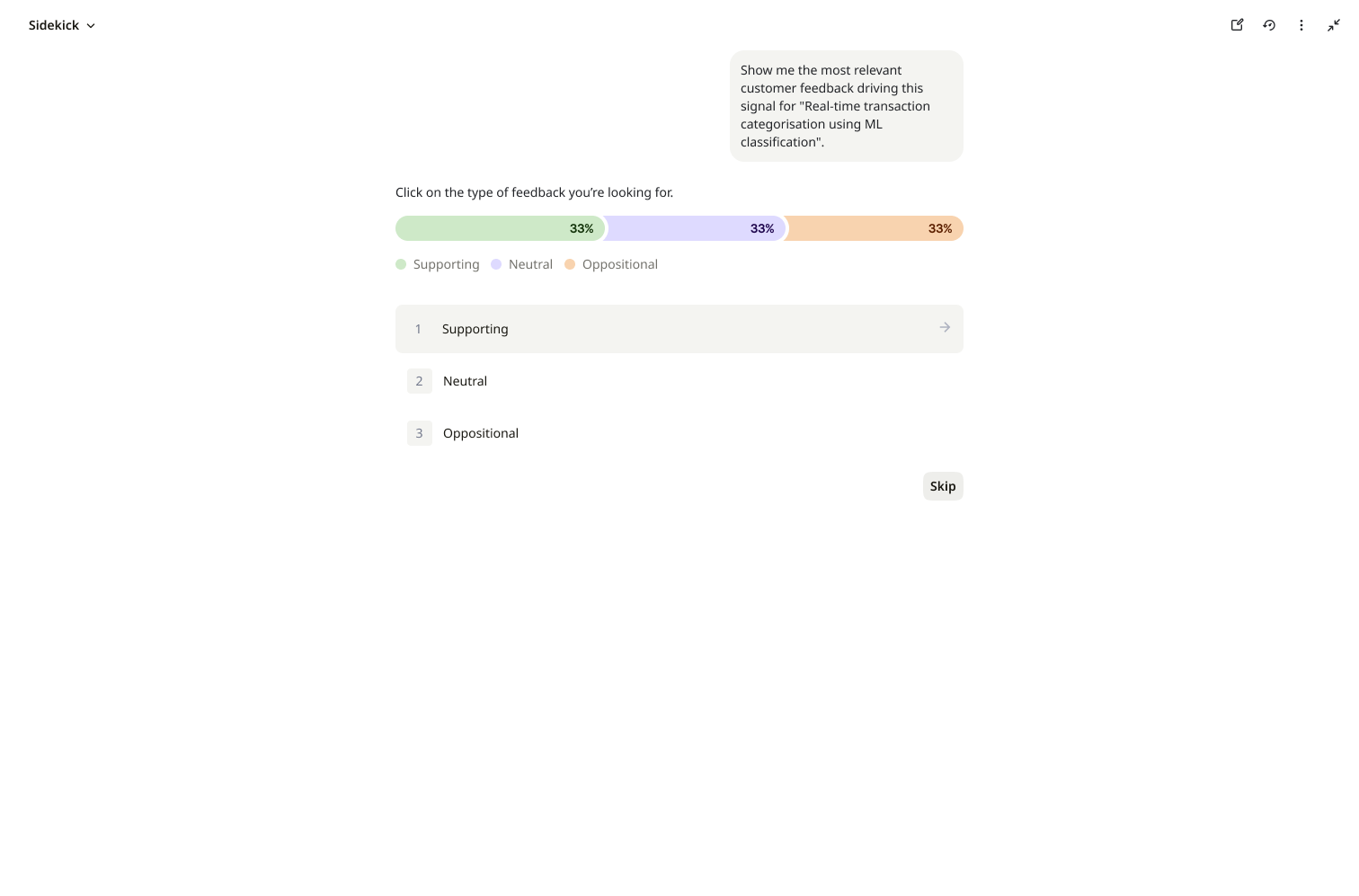
Signals reduced PM anxiety by clearly showing either nothing (indicating they were on track) or a small set of items needing attention.
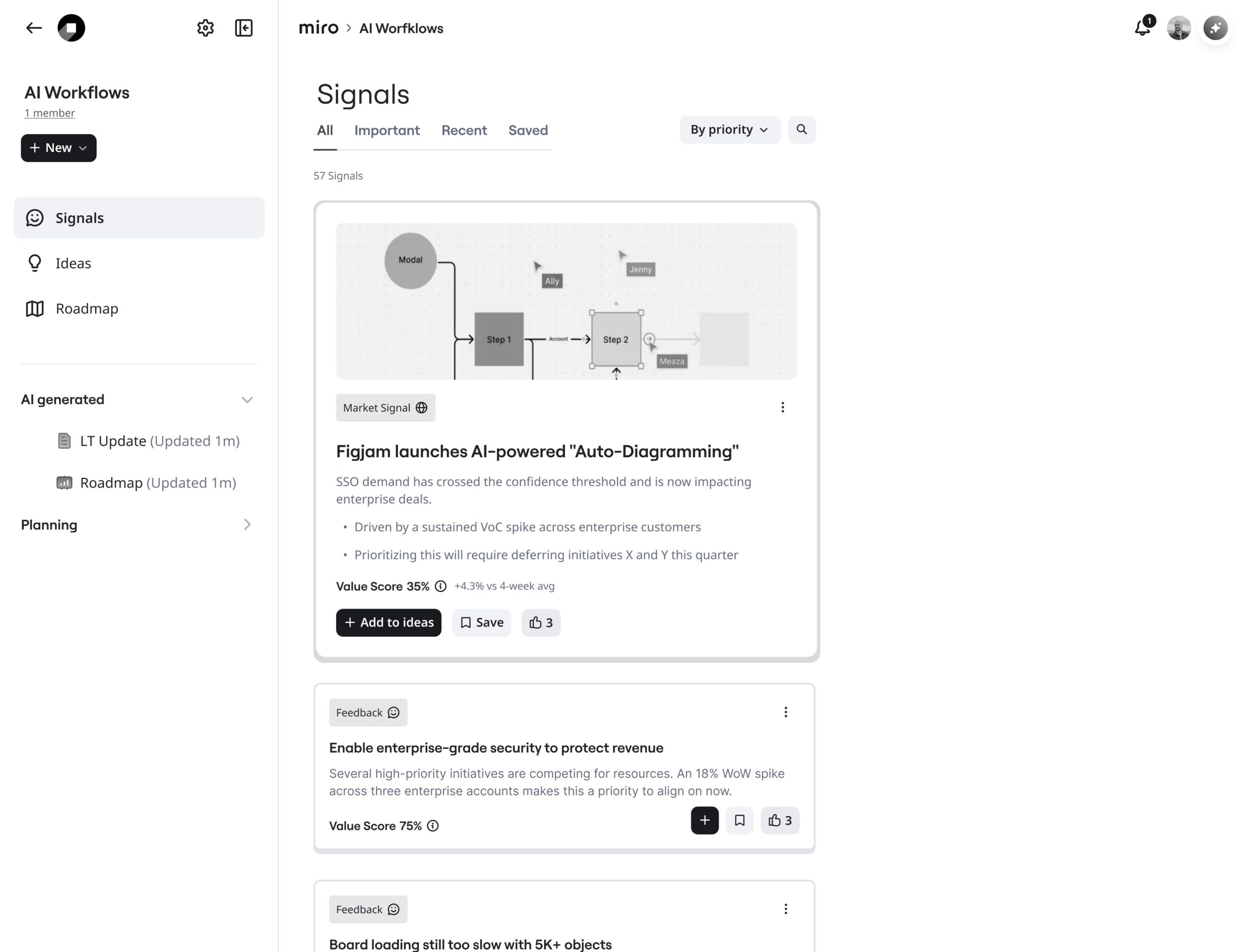
Proactive and collaborative intelligence
In addition to complying with AI governance patterns, updates were explored as a way to integrate agent updates and human conversation on roadmapping items.
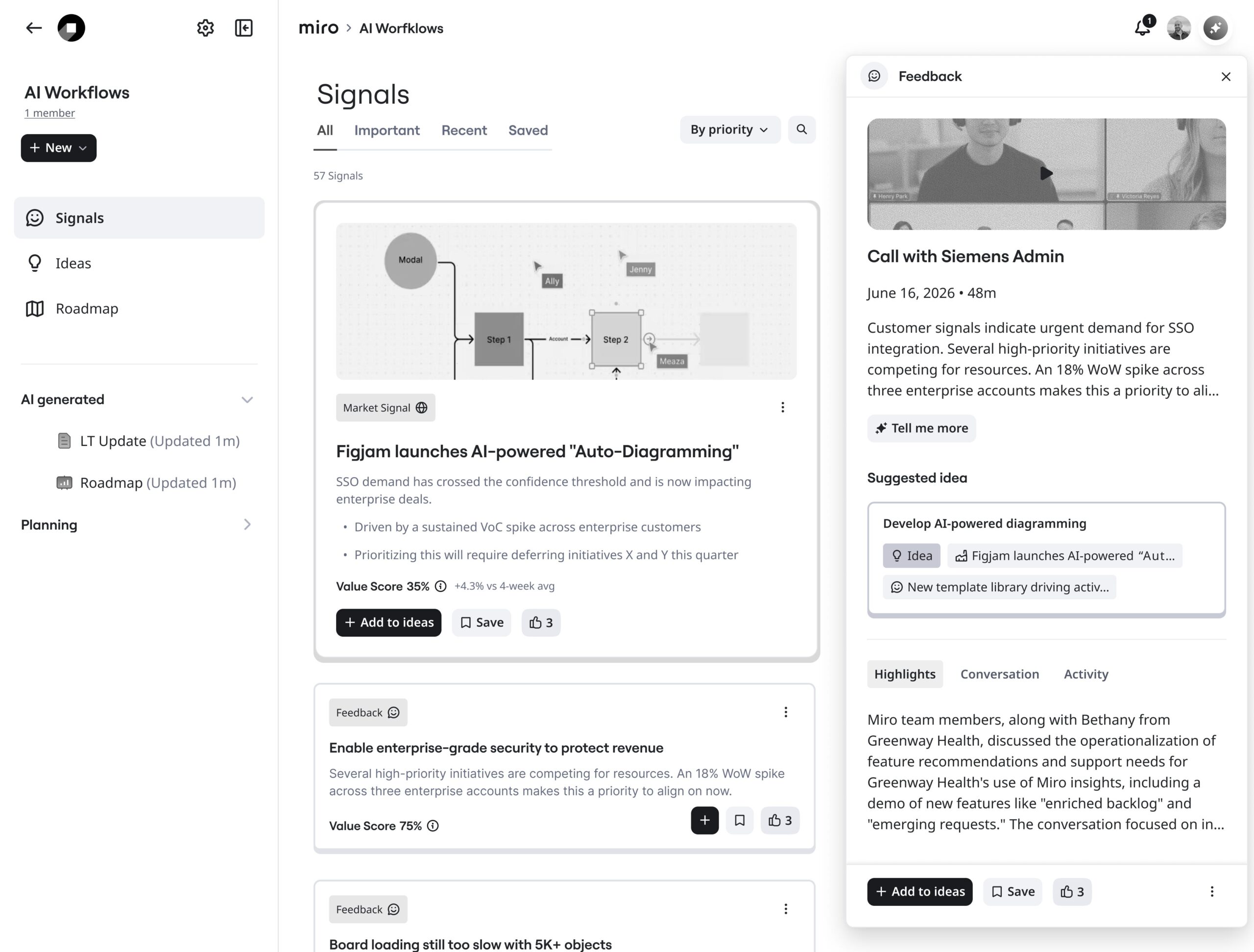
Feedback to roadmap effortlessly
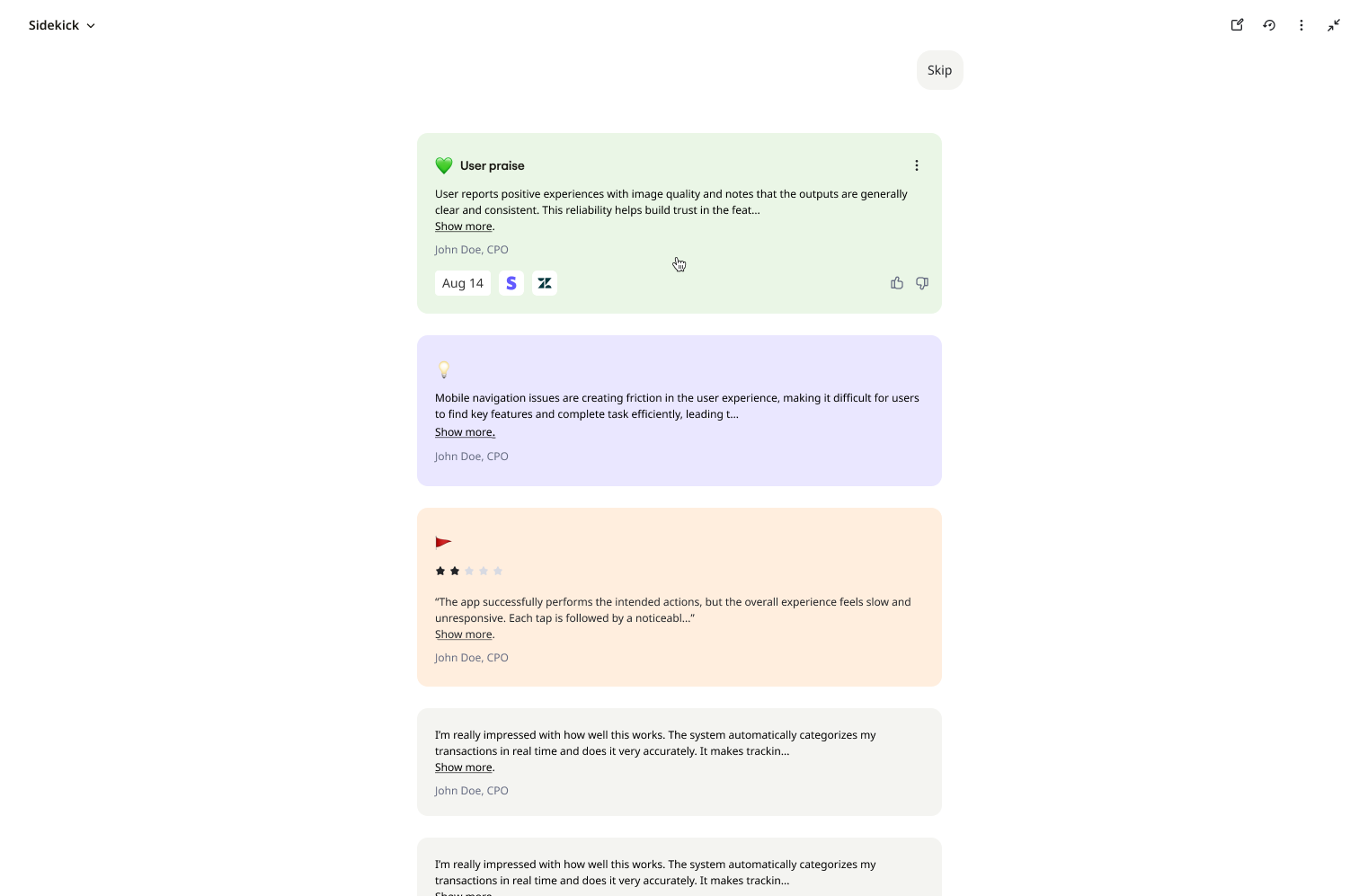
Linking customer feedback to roadmap items gave each feature a clear 'why,' enabling more objective prioritization, faster alignment, and decisions backed by real demand.
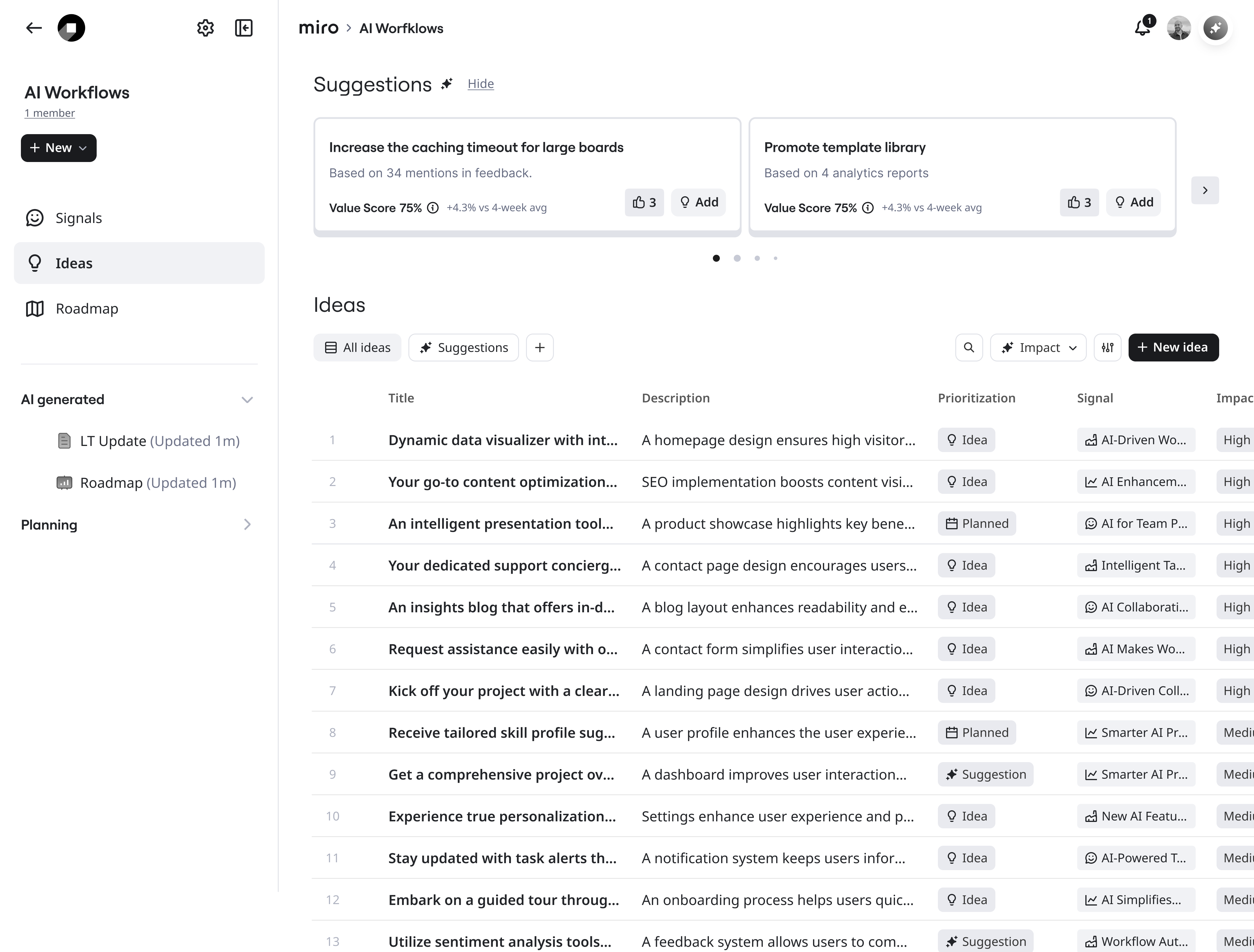
Human intervention when needed
An AI-powered ideas workspace that surfaces, prioritizes, and connects product opportunities from signals and suggestions to help teams make faster, evidence-based roadmap decisions.
First-version release
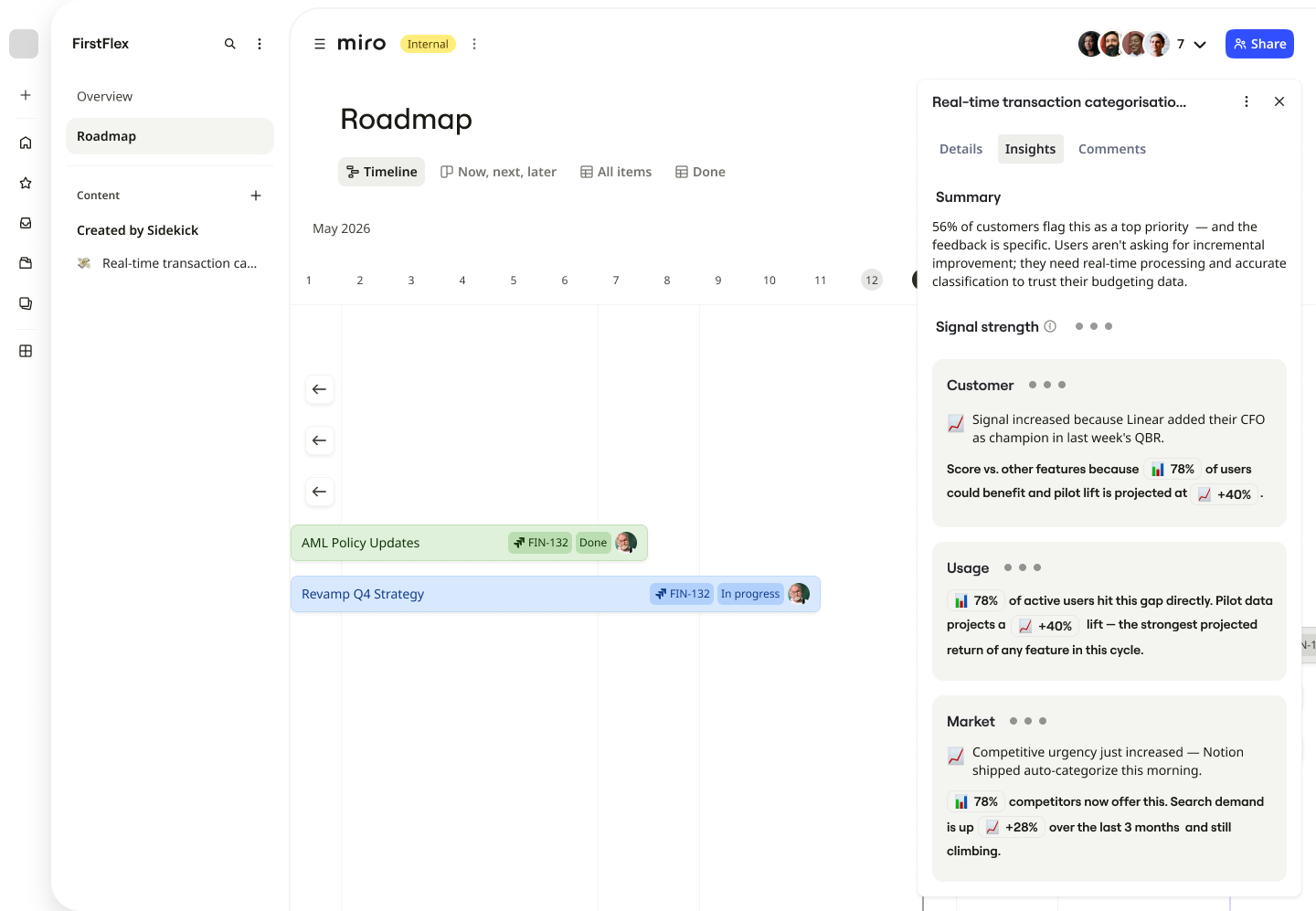
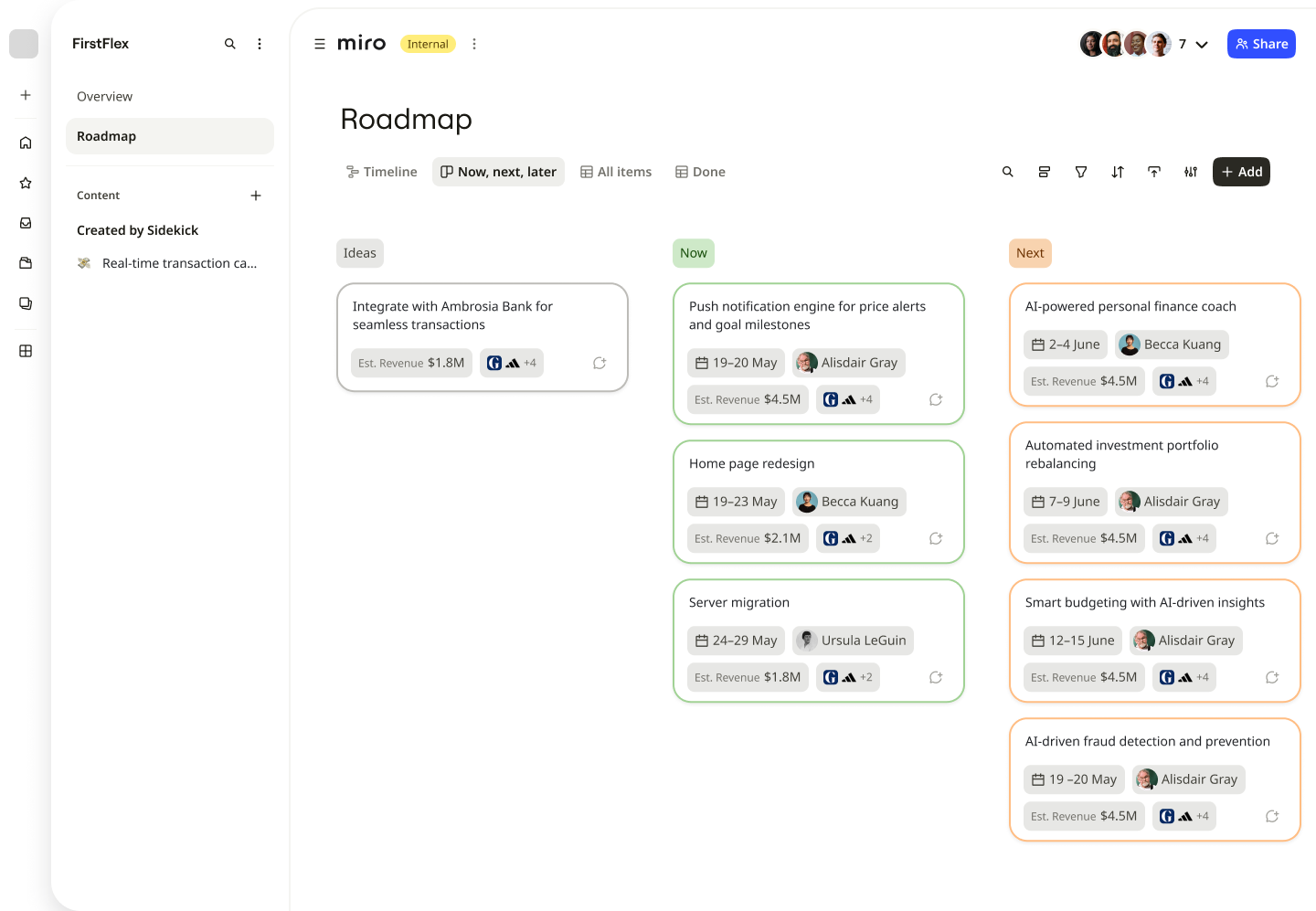
We scoped the first release as a minimum lovable product: a focused, high-fidelity slice of the experience built to demo, sell, and generate momentum at our annual Canvas 26 event.
Vision
Proactive
Anticipate what teams need before they go looking.
Show what matters
Every item grounded in feedback and quantified impact.
Evidence based
Filter noise into a small set of signals worth acting on.
Agent first
AI aggregates and prioritizes; humans step in for judgment.